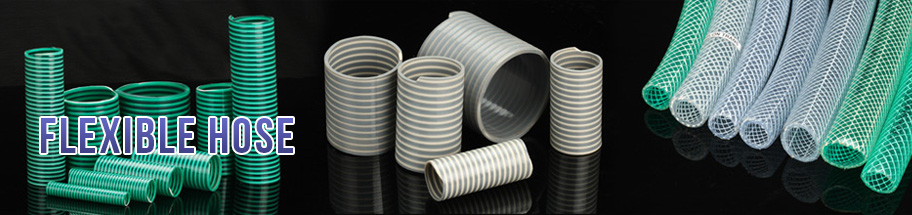
Rowe Equipment specializes in industrial flexible hose and tubing for plastics processing material handling applications. Our flexible hose products provide reliable connections for pneumatic conveying systems, vacuum loaders, dust collection, and material transfer throughout your polymer processing facility. Built to withstand the demands of continuous operation, our hoses deliver dependable performance for pellet conveying, regrind transfer, and powder handling.
Flexible hose is essential for connecting material handling equipment throughout plastics processing operations. From pneumatic loaders and vacuum receivers to granulators and dust collectors, flexible hose provides the critical link that moves raw materials, regrind, and additives where they’re needed. Quality flexible hose maintains its integrity under vacuum pressure, resists abrasion from conveyed materials, and provides static dissipation to prevent dust ignition hazards.
304 / 316 SS
+ Carbon Steel
20-500+
Mesh Counts
Same-day
Shipping Available
30+ Years
In Polymer Filtration
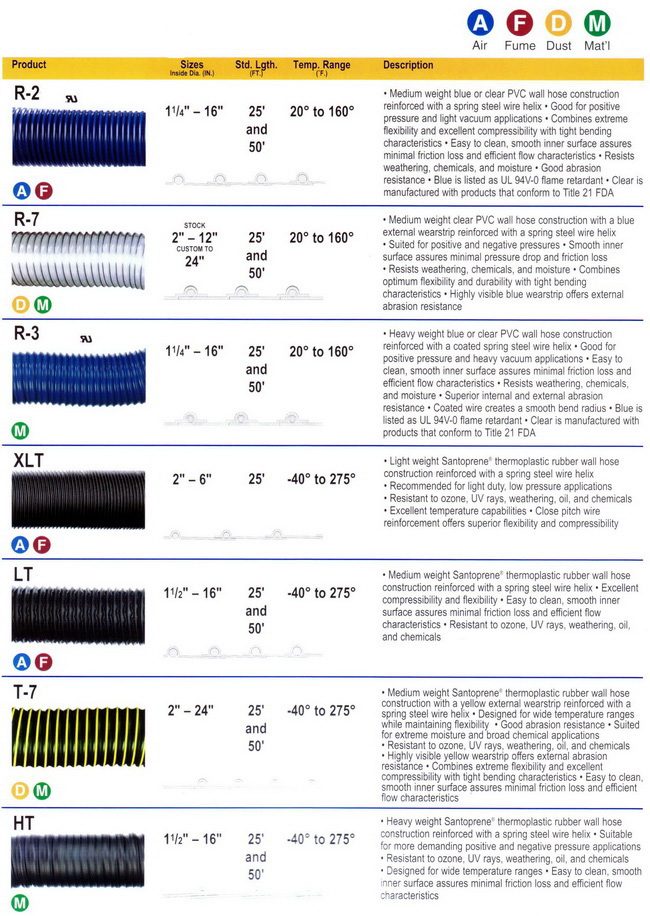
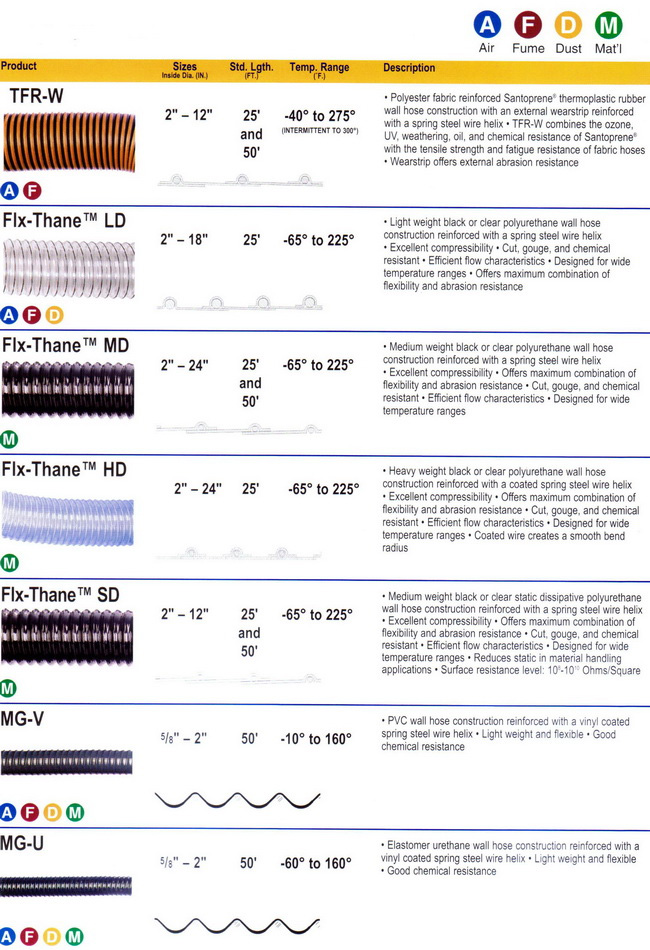
Excellent abrasion resistance for conveying pellets, regrind, and abrasive materials. Superior durability, smooth bore interior, static dissipative options, and FDA-compliant grades available.
Economical performance for general vacuum conveying and dust collection. Wire-reinforced construction resists collapse, lightweight and flexible, clear or opaque options for visual monitoring.
Critical for safely conveying materials that generate static electricity. Embedded ground wire, conductive wall construction, ATEX-compliant options, essential for dust collection systems.
Handles hot air conveying and applications near extruders and dryers. Silicone construction to 500°F, PTFE-lined options, fiberglass-reinforced, insulated options available.
Standard diameters from 1.5″ to 6″ for all equipment connections. Common sizes include 2″ for standard loaders, 3″ for high-volume transfer, and 4″ for central conveying systems.
Flexible hose to OEM specifications for all major pneumatic conveying equipment manufacturers. Common sizes stocked for same-day shipping. Custom cut lengths available.
Key factors to consider when selecting the right Industrial Flexible product:
Material Conveyed:
Pellets, regrind, powder, or additives affect abrasion requirements and hose material selection
Operating Temperature:
Match hose rating to ambient and material temperatures for reliable performance
Vacuum Level:
Ensure wall construction resists collapse under system vacuum pressure
Static Generation:
Consider anti-static or conductive hose for dust-generating applications to prevent ignition hazards
Bend Radius Requirements:
Match hose flexibility to routing constraints and installation space
FDA/Food-Grade Requirements:
Specify compliant materials for food-contact applications and pharmaceutical use
Injection Molding
Blow Molding
Extrusion
Compounding
Plastic Recycling
Blown Film
Food Processing
Pharmaceutical
Central Conveying Systems
Material Drying Systems
Pneumatic Loader Connections
Granulator Discharge
Dust Collection Systems
Central Conveying Systems
Dryer Connections
Material Transfer Lines
Vacuum Receiver Connections
Regrind Return Systems
Additive & Colorant Conveying
Hot Air Supply Lines
Hose diameter should match your equipment connections and conveying system design. Undersized hose restricts flow and increases pressure drop, while oversized hose may not maintain adequate conveying velocity. Generally, match the hose ID to your equipment outlet diameter. Our technical team can assist with sizing calculations to ensure optimal performance.
Use anti-static hose whenever conveying materials that generate static electricity, particularly when handling fine powders, freshly ground regrind, or materials near combustible dust concentration levels. Static-dissipative hose is essential for dust collection systems to prevent ignition hazards. Anti-static hose features embedded ground wires or conductive wall construction to safely dissipate static charges.
Replacement intervals depend on material abrasiveness, operating conditions, and hose construction. Inspect hoses regularly for wear spots, cracks, collapsed sections, or degraded connections. Replace hose showing visible wear before failure causes production interruption. Polyurethane hose typically outlasts PVC in abrasive applications, while premium materials offer extended service life.
Hose collapse typically results from insufficient wall strength for the vacuum level, excessive bend radius, or accumulated wear that weakens the hose structure. Select hose with appropriate vacuum rating and maintain proper bend radius during installation. Wire-reinforced construction provides superior collapse resistance under high vacuum conditions.
Yes, Rowe Equipment supplies FDA-compliant flexible hose suitable for food-contact applications. Specify your food-grade requirements when ordering to ensure proper material certification. FDA-compliant polyurethane and PVC options are available for food processing and pharmaceutical applications.
For accurate quotes, provide: hose inside diameter, length required, material type (polyurethane, PVC, silicone, etc.), temperature range, vacuum rating needed, and any special requirements (anti-static, FDA-compliant, etc.). Equipment make/model helps ensure correct fit. Our team can assist with hose selection if you’re unsure of specifications.
Interactive questionnaire covering material being conveyed, operating temperature, vacuum level, static generation concerns, and FDA requirements with recommended hose type output.
Calculate optimal hose diameter based on conveying requirements. Inputs for material type, conveying rate, distance, and blower capacity with velocity recommendations.
Estimate hose service life and plan replacement budgets. Compare economy vs. premium hose options with total cost of ownership and break-even analysis.
Determine if anti-static or conductive hose is needed for safe operation based on materials handled, dust generation, and regulatory requirements.
Streamlined specification form for ordering custom-cut flexible hose. Step-by-step wizard collecting hose type, diameter, lengths, and end connections.
Diagnose common flexible hose problems including collapse, premature wear, material hang-up, static problems, and vacuum leaks with corrective actions.
Match flexible hose to specific pneumatic loader and conveying equipment by manufacturer and model with OEM specifications and compatible alternatives.
Assess all flexible hose throughout your facility with guided evaluation. Generate prioritized replacement schedule, inventory needs, and budget estimate.